🖊️ Written by Priya Nair
Updated 5 months ago
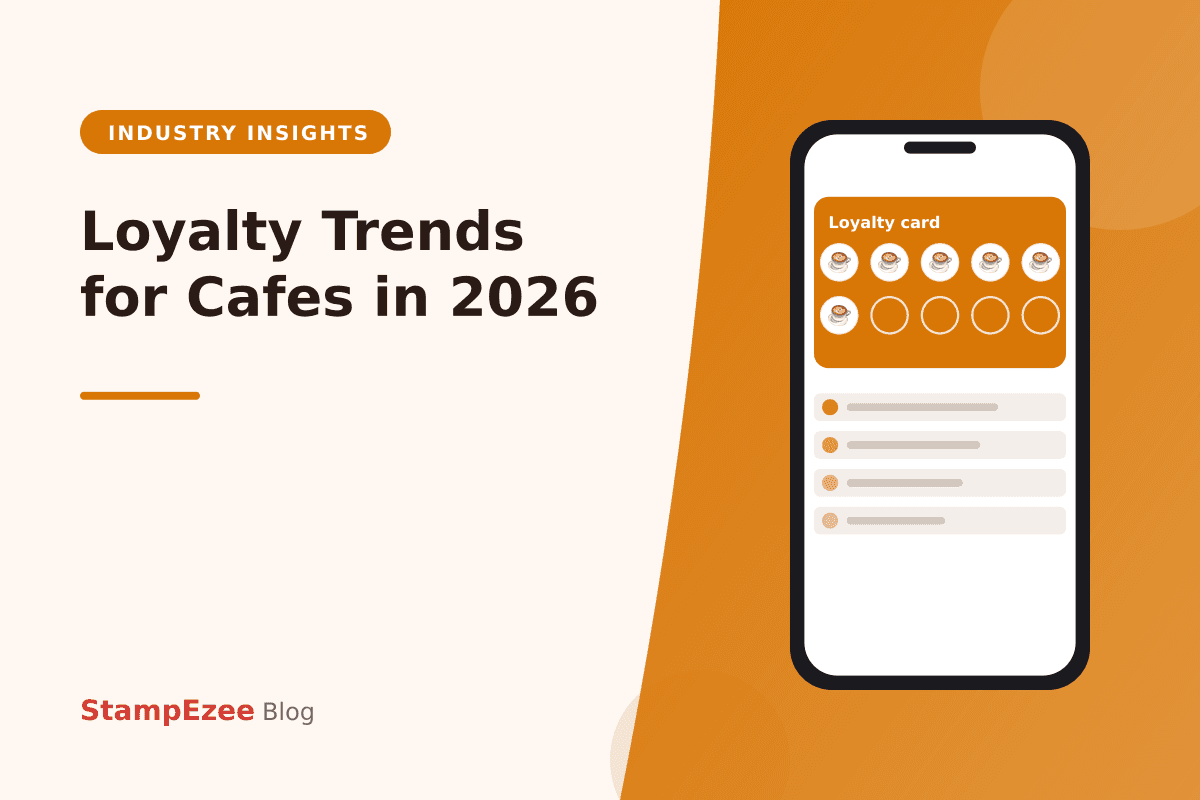
Cafe loyalty is changing shape. The familiar paper punch card is giving way to digital stamp cards that live in a customer's phone, while owners lean on real visit and spend data instead of guesswork to decide what to offer and when. Heading into 2026, the cafes getting the most out of loyalty are the ones treating it as a connected system, not a stack of separate tools.
The paper punch card is quietly disappearing from cafe counters. It gets lost, forgotten at home, or left to fade in a drawer, and none of that helps a cafe bring customers back. Digital stamp cards solve the practical problem: they live on a phone, so a customer never has to remember to carry anything.
More cafes are also adding their stamp cards to Apple Wallet and Google Wallet, so the card sits alongside boarding passes and tickets and can update itself automatically after every visit. For customers, that means one less app to open. For cafe owners, it means a card that is genuinely hard to lose, and a loyalty program that feels modern rather than like a leftover from the till drawer.
Generic loyalty offers are starting to feel out of place. When a cafe can see how often a customer visits, what they tend to order, and how much they typically spend, it becomes possible to shape offers around that pattern instead of sending the same message to everyone.
A customer who visits every weekday morning for a coffee is a different kind of regular than someone who drops in occasionally for a birthday treat, and 2026's loyalty programs are increasingly built to tell the two apart. This is less about clever marketing tricks and more about paying attention: the data a cafe already collects through stamps and points can quietly inform which reward, message or timing will actually land.
Relying on a single channel to reach customers is losing ground. Some customers respond to a push notification, others barely open the app but read every WhatsApp message, and others still prefer email or a text. Cafes that lean on only one channel are quietly missing a chunk of their audience.
The trend for 2026 is combining push notifications, email, SMS and WhatsApp within the same campaign, letting the channel fit the message rather than the other way around. A lapsed-customer win-back message might work best as a text, while a birthday offer might suit a warmer email. Matching the channel to the moment is becoming as important as the offer itself.
Asking staff to remember to scan a loyalty QR code during a rush is asking a lot, and it is one of the most common reasons stamps and points go unrecorded. Integrating loyalty with the point-of-sale system, such as Lightspeed, removes that step entirely.
As more cafes connect their POS to their loyalty program, issuing rewards is becoming less of a manual task and more of a background process that simply works.
Collecting stamps is starting to feel less like bookkeeping and more like play. Elements borrowed from games, XP, levels, badges and daily leaderboards, are showing up in loyalty programs to give customers small, satisfying reasons to keep coming back beyond the reward itself.
The same shift is happening on the staff side. Loyalty Executives who earn XP and badges for scanning stamps and helping customers redeem rewards often engage with the program more consistently, which matters just as much as customer enthusiasm. As cafes look for ways to keep loyalty feeling fresh rather than routine, gamification is becoming one of the more visible trends to watch in 2026.
Was this article helpful?

Contact Us
Still have questions?
If you have questions about setup, loyalty flows, pricing, or roles, our team is here to help you understand how StampEzee fits your business before you launch.